[Authors: Harsh and Suhana, Third-Year Law Students at Hidayatullah National Law University, India]
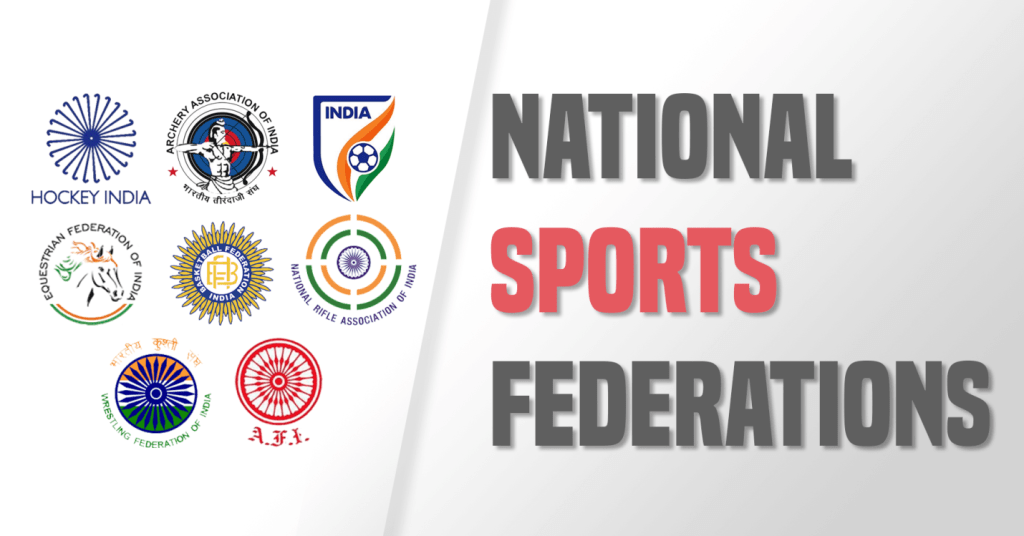
Did you know that seven out of eight Olympic medals that India has received in wrestling have been won by wrestlers from Haryana and still the Wrestling Federation of India (WFI) changed its selection rules in 2021 to introduce an allegedly arbitrary state quota which reduces the representation of Haryanvi wrestlers? Profound gaps also persist in football governance, exemplified by the Supreme Court-appointed Committee of Administrators’ intervention in operations of All India Football Federation (AIFF), a violation of FIFA regulations which lead to the AIFF’s ban. Further, the National Anti-Doping Agency (NADA) has been a lax body, and has failed to fulfil its positive duties even in the face of harsh criticism. In a case before Delhi High Court, Manika Batra alleged that the Table Tennis Federation of India (TTFI) implemented rules aimed at excluding her from international tournaments because she leveled match-fixing allegations against her coach, where the Delhi High Court suspended TTFI’s executive committee, stating that the allegations by the Indian table tennis star were “prima facie blameworthy”. Moreover, sixteen out of thirty national sports federations do not comply with the Prevention of Sexual Harassment of Women at Workplace (Prevention, Prohibition and Redressal) Act, 2013 (POSH Act). They either do not have an Internal Complaints Committee mandated under Section 4(1) of the POSH Act or do not meet the conditions for such committees provided under Section 4(2). This article seeks to investigate at length the problems in the various National Sports Federations (NSFs) through doctrinal and non-doctrinal research, and analyse the need for a national law which regulates all NSFs in India.
Understanding the Problem of Sexual Harassment in Sports
In 2023, India witnessed extensive protests following the accusations made by Vinesh Phogat, a three- time Commonwealth Games gold medalist against the Chief of the WFI, Brij Bhushan Singh for sexual harassment, which eventually led to the unveiling of the deeply entrenched misogyny that women have to face in the sports industry while striving to forge a successful career as professional athletes. In the wake of widespread national discontent, a government-appointed panel intervened and uncovered the absence of an ICC, as mandated by the POSH Act. This skirmish across various bodies illustrates the importance of evaluating the existing legislation and sports specific policies to provide the athletes with a shield of law to foster a safe sports environment where they can ensure accountability and thrive without abuse and harassment. Taking a look at the Indian regulatory framework, there exists a two-fold approach for the protection of athletes against sexual harassment, which includes internal investigations by the Internal Complaints Committee (ICC) of NSFs and external grievance resolution by police under Bharatiya Nyaya Sanhita, 2023 (BNS), or Protection of Children from Sexual Offences Act, 2012 (POCSO Act), and the POSH Act. Giving a broad meaning to the term ‘workplace’, section 2 (o) of the POSH Act clearly states that it will cover within its ambit any ‘sports institute, complex, stadium or competition or games venue, whether residential or not used for training, sports or other activities relating thereto’ to ensure that the purpose for which this law has been drafted is not met with dead ends. If victims of harassment are not satisfied with the resolution provided by such ICC, they can always file a complaint under the National Commission for Women but such a resort is unlikely to happen considering that the mandated ICCs are not incorporated in almost half of the sporting federations, and even if they are present, their non-compliance with Section 4(2) of POSH Act (eligibility conditions for ICCs) makes them futile.
Table 1
| S. No. | Sport | NSF | Whether ICC mandated under Section 4(1) of POSH exists or not ? | Whether ICC complies with Section 4 (2) of the POSH ? | Additional information |
| 1. | Table Tennis | TTFI | No | N/A | An “investigation” committee exists which does not comply with POSH Act |
| 2. | Handball | HFI | No | N/A | – |
| 3. | Wrestling | WFI | No | N/A | Affairs are being handly by Ad Hoc committee appointed by IOA |
| 4. | Volleyball | VFI | No | N/A | – |
| 5. | Gymnastics | GFI | No | N/A | – |
| 6. | Judo | JFI | Yes | No | Number of members are less than 4, which is the minimum under POSH. |
| 7. | Squash | SRFI | Yes | No | Number of members are less than 4, which is the minimum under POSH. |
| 8. | Kabaddi | AKFI | Yes | No | Number of members are less than 4, which is the minimum under POSH. |
| 9. | Billiards | BSFI | Yes | No | Number of members are less than 4, which is the minimum under POSH. |
| 10. | Badminton | BAI | Yes | No | No external member. |
| 11. | Archery | AAI | Yes | No | No external member |
| 12. | Basketball | BFI | Yes | No | Allegations exist that Anitha Durai is not eligible to be an independent member under Section 4(2) (c) |
| 13. | Trialthon | ITA | Yes | No | No external member |
| 14. | Yachting | YAI | Yes | No | No external member |
| 15. | Kayaking | IKCA | Yes | No | No external member |
| 16. | Weightlifting | WFI | Yes | No | No external member and total number of members are less than 4. |
The principle behind ICC was manifested under the Vishakha Guidelines promulgated by the Supreme Court, according to which sexual harassment should be prevented at any workplace. Hence, it is also the duty of NSFs to prevent sexual harassment of athletes by ensuring compliance with the applicable laws in this regard. In this regard, the Indian Olympic Association Safe Sport Policy has been drafted with a two-fold objective of raising awareness regarding what constitutes harassment and abuse, and propelling an intricate framework for systematic reporting and detailed management of harassment and abuse cases. The IOA Safeguarding Officer (SGO) and the Chef de Mission of the Games or IOA Executive Director or Director on Duty at the Games are responsible to receive complaints, which is followed by an investigation and preparation of a report with recommendations.
Under the Safe Sports Policy, the SGO holds the authority to assess and determine the appropriate course of action upon receiving a complaint. This involves an initial screening to evaluate whether the alleged conduct amounts to a criminal offence, in which case it must be reported to law enforcement authorities in accordance with mandatory reporting obligations. If the matter is non-criminal but falls within the jurisdiction of the IOA, such as violations of the Code of Conduct, harassment, or other forms of misconduct within the sporting context, the SGO may refer it to the internal disciplinary mechanisms for further investigation and adjudication. However, if the complaint pertains to issues beyond the scope of IOA’s authority, such as purely contractual disputes or employment-related matters outside its regulatory framework, the SGO may determine that the matter is outside the IOA’s jurisdiction and guide the parties toward appropriate external remedies. The IOA Arbitration Commission can also entertain appeals against the decisions of the SGO within 21 days. Along with this, under the Athletic Federation of India, Safeguarding Athletes from Harassment and Abuse (SAHAS) is committed to protect athletes by following a zero tolerance policy towards any kind of harassment and conducting a separate internal inquiry, with the Presiding Officer as its head.
Based on the information available about complaints of sexual harassment between 2018 and 2023 (refer Table 2 below), it is evident that there exists a significant reporting gap, that likely reflects underreporting rather than an actual absence of incidents. The uniform figure of one complaint per NSF raises questions about the accessibility, trust, and effectiveness of the grievance redressal mechanisms. Factors such as fear of retaliation, lack of awareness, potential stigma, and systemic barriers may be contributing to the limited number of cases formally reported and pursued. Therefore, while formal compliance with legal requirements like POSH Act may exist on paper, these statistics suggest that the reporting framework may not be adequately empowering victims to come forward or may be failing to capture the true extent of the problem.
Table 2


The absence of functional ICCs within sports organisations, as mandated under the POSH Act, presents a significant challenge to the safety and well-being of athletes, particularly women. Compliance with the POSH Act is not merely a legal obligation but a foundational component of ensuring institutional accountability and a safe environment for all sportspersons. In many instances, sports federations either fail to constitute ICCs altogether or do so in a perfunctory manner, lacking transparency, accessibility, and procedural integrity. This institutional failure leaves athletes with limited recourse for addressing grievances internally, compelling them to resort to external legal remedies through formal litigation processes. However, for athletes, whose careers are inherently short-term, performance-based, and physically demanding, the prospect of engaging in prolonged, adversarial legal proceedings poses a severe deterrent.
Litigation not only demands significant time and financial resources but also carries the risk of reputational harm, emotional distress, and potential retaliation from within the sports community, particularly in cases where the accused holds institutional power. Moreover, the slow pace of judicial processes in India further exacerbates the burden, making the pursuit of justice an untenable option for many athletes. This structural gap in internal redressal mechanisms effectively silences complaints, normalises misconduct, and perpetuates a culture of impunity. From a governance perspective, the failure to institutionalise and operationalise effective ICCs reflects a broader disregard for athlete welfare and gender equity within the administrative frameworks of sports bodies. Therefore, the lack of adherence to PoSH requirements does not merely represent procedural non-compliance, it fundamentally undermines the accessibility of justice and the psychological security required for athletes to perform and thrive. Addressing this gap must be treated as a critical policy priority to ensure that redressal mechanisms in sport are both preventive and responsive in nature.
Is the Playing Field Truly Level with Political Intrusion?
On meticulous observation, there can be established a direct relationship between political interference in sports and unfair treatment of athletes in India. When NSFs are helmed by politicians or retired bureaucrats, figures whose power often eclipses technical expertise, such political pressure is bound to make regulatory frameworks falter. This reflects in cases such as the one where the junior athletic coach in Haryana accused the state’s Sports Minister, Sandeep Singh of sexual harassment, only to be suspended thereafter.
This political intrusion in sports not only hampers transparency and accountability but also impacts the selection process of individual players, begets favouritism and disorder, and decreases the efficiency of teams due to power being prioritized over athletic proficiency. As a consequence, talented players are neglected leading to individual injustice and collective detriment in the country’s performance. The National Code for Good Governance in Sports, 2017 (National Code 2017), attempted to rectify this issue by banning politicians from serving as board members in NSFs to limit the political and fiscal sway in sports. Although the National Code 2017, sought to address these issues by barring politicians from holding office in NSFs and introducing a four-year cooling-off period after two consecutive terms, the Code has not been implemented due to resistance over these very provisions. This continued lack of enforceability allows political interference to persist, undermining both the autonomy and integrity of sports governance in India. In reality, there is no requirement for politicians to assume the presidency of sports federations in India because the aforesaid post requires concrete understanding of practical problems, athletic expertise, and technical knowledge which equip them to address the unique intricacies inherent in sports administration. Further, the conflict of interests and incorporation of non-sporting political agendas can detract from the main objective of the NSFs which is to foster excellence and provide opportunities in these fields at the grass root levels. This discord can jeopardize the integrity of such federations, specifically in sexual harassment cases, while impeding official investigations. A 2018 report by ‘the Bridge’ found 47% of the Olympic National Sports Federations in India to have a politician holding the position of President. Given the well documented history of political influence in NSFs, the presence of political leaders in the board structures raises concerns about the autonomy of the NSFs and the danger of political propaganda interfering with the development of an independent structure of sports management.
Impact of State Quota on Sports Competitiveness
In 2021, the WFI brought a big policy change according to which only one team from each State was allowed to participate in the Nationals and the quota winning wrestlers may have to pass some trials before qualifying for the Olympics. While in 2024 it was reported that there will be no trials for Olympic quota winners, the wrestlers hailing from Haryana were against the policy change in State quota selection, considering Haryana constitutes the maximum number of wrestlers who win medals at different events.
Table 3
| S.No | Event/Competition | Medals won by wrestlers from Haryana |
| 1. | National Championship in Jalandhar | 32 out of 40 medals in men’s freestyle 30 out of 40 medals in women’s wrestling |
| 2. | 36th Edition National Games Gujarat | 116 medals (38 gold) |
| 3. | Olympics Medal- Beijing 2008 | Sushil Kumar- men’s freestyle 66 Kg (Bronze) |
| 4. | Olympics Medal- London 2012 | Sushil Kumar- men’s freestyle 66 Kg (Silver) |
| 5. | Olympics Medal- London 2012 | Yogeshwar Dutt- men’s freestyle 60 Kg (Bronze) |
| 6. | Olympics Medal- Rio 2016 | Sakshi Malik- women’s free style 58 Kg (Bronze) |
| 7. | Olympics Medal- Tokyo 2020 | Ravi Dahiya- men’s freestyle 57 Kg (Silver) |
| 8. | Olympics Medal- Tokyo 2020 | Bajrang Punia- men’s freestyle 65 Kg (Bronze) |
The table indicates that the state quota may compromise meritocracy as there will be a decreased probability of skilled wrestlers from Haryana being selected and other wrestlers from other states will be given a chance in the name of equal state representation, which will lead to dilution of talent. This quota will also act as a barrier for the states with a better infrastructure and strong wrestling culture making the overall standard and quality of the wrestlers chosen as inconsistent. With the loss of the psychological incentive to work hard due to a greater chance of selection, it is expected that the skill development in wrestlers will substantially get discouraged. It is quite obvious that if talented wrestlers are aware about their potential getting overlooked due to state quota, the rate of interest in this field as an occupation will gradually decrease. Moreover, it is evident that no other state is performing exceptionally well like Haryana for which it deserves additional funds and resource allocation but the provision of quota will work towards equal distribution of resources across states barring Haryana from enjoying the perks it deserves on the grounds of proven track records ultimately leading to underutilization of talent hubs.
The WFI’s intent behind this policy was to promote broader state representation, foster wrestling culture in underrepresented regions, and ensure balanced resource distribution across the country. However, unlike team sports such as football or kabaddi where state representation is crucial, wrestling is an individual sport where meritocracy is essential to maintain performance standards. The imposition of state quotas risks compromising merit by limiting the selection of skilled wrestlers from states with established wrestling ecosystems, like Haryana, and instead allowing less competitive states equal representation. Over time, this could demotivate elite athletes, lower the overall skill level, and weaken India’s global competitiveness in wrestling. While grassroots development and inclusive participation are important objectives, final selections for national teams and international representation must remain strictly merit-based to uphold excellence and fairness. A more balanced approach would be to implement state-level quotas in training academies and development programs, while preserving meritocracy for the highest levels of competition.
Composition of the Boards of National Sports Federations
Bhinder and Bhargava (2021) build on the work of McLeod, Star and Shilbury (2021) from an Indian context and analysed the composition of the boards of NSFs in the context of gender disparity, professional occupation and board size. With Indian women winning medals at the Olympics and international leagues in almost all sports – be it Saina Nehwal and P. V. Sindhu in badminton, Mary Kom in Boxing and Sania Mirza in Tennis, the participation of women in sports is booming. However, if we look at the status of representation of women in the regulatory bodies of these sports, the situation is appalling. A study by InGovern Research Services (2016) depicted the low percentage of representation of women in most NSFs, and a complete lack of female representation in some. Unlike corporate boards in India, which are legally required by section 149(1) of the Companies Act, 2013, to have at least one-woman director, there is no such obligation for National Sports Federations (NSFs) governed under the National Sports Development Code of India, 2011 (Sports Code 2011), despite the severe underrepresentation of women. Research by Terjesen, Sealy, and Singh (2009) suggests that gender-diverse boards can enhance decision-making and improve access to human and financial resources within sporting organizations. The professional background of the members of a sports board has always been an arena of debate. The two most prevailing opinions are that
- They should be headed by sports persons or people having sports knowledge as they would best understand the needs of the players.
- They should be headed by people who have the necessary management and business acumen.
Both of these opinions have their pros and cons. Sportspersons may be less equipped in business acumen and management skills and at the same time people belonging to the second group may be unaware of the nuances of sports and needs of sportspersons.
Even though both of these opinions have merit, most research papers, national sports policies of other countries and recent incidents like the 2023 Wrestlers’ protest warrant that we shift to the former opinion. Below is a table from Bhinder and Bhargava (2021) showing the percentage of each occupation on NSF boards in India.
Table 4

It is pertinent to note that information about only around 40% of the members of the NSFs was publicly available, and details regarding the occupations of women members were even more limited. While the largest occupational group among NSF members comprises sportspersons, athletes, and coaches (146 members), the presence of military personnel, accounting for approximately 10.39% of total members, initially appears disproportionate. However, this representation can be better understood in the context of the Indian military’s historic involvement in sports such as equestrian and yachting, and its broader contribution to India’s sporting achievements, Subedar Neeraj Chopra, India’s first Olympic gold medallist in javelin, being a recent example. Importantly, most military-affiliated members also have sports backgrounds. Nevertheless, the focus must remain on whether such occupational diversity translates into effective governance. The number of elected politicians on NSF boards is unusually high compared to international standards. The accounting, business and legal occupations hold 0.3%, 18.1% and 1.19% respectively, making a combined total of merely 19.59% of the NSF boards.
The statistics appear to indicate a conscious policy-initiated focus on ensuring the appointment and participation of individuals with a background of active participation in sports or government. The key issue is not the sectoral origin of the members, but whether they possess the managerial competencies, strategic insight, and inclusive leadership skills necessary to guide sports bodies. Furthermore, the lack of transparency around the professional credentials of women members limits meaningful evaluation of their roles and impact. Therefore, rather than highlighting professional diversity alone, future analyses should assess how these backgrounds influence the quality and inclusivity of leadership within sports organisations.
Recommendations
It is quite evident that the existing regulatory framework is not sufficient to combat the challenges marring the sports industry. To begin with, the widespread non-compliance with the POSH Act by NSFs must be urgently addressed. The establishment of functional, independent, and athlete-accessible ICC in all federations should be made a non-negotiable prerequisite for recognition and funding by the Ministry of Youth Affairs and Sports. These ICCs must be monitored by a central oversight body, and their proceedings should be periodically audited for procedural compliance and fairness. Further, capacity-building initiatives, including mandatory gender-sensitisation and POSH training for all federation staff and coaches, should be institutionalised to create a safer sporting ecosystem.
The issue of state-based quotas also requires recalibration. While equitable regional representation in sports is a worthy goal, it should not come at the cost of meritocracy. States like Haryana, which consistently produce a large share of elite athletes, must be rewarded through greater funding, training infrastructure, and expanded representation in national competitions. A tiered qualification system could be introduced, allowing high-performing states to send multiple teams or athletes, while offering development support to underrepresented states through zonal training academies and wildcard entries. This ensures both inclusivity and excellence in talent identification.
Further, to ensure transparency and accountability an ombudsman can be appointed to check the functioning of the sports regulatory bodies. Implementation of the National Code for Good Governance, 2017, which, as discussed earlier, puts a complete ban on appointment of politicians to the board of NSFs, among other key changes, will also play a key role in revamping the regulatory landscape in sports. As long as politics is involved in sports, the working of the federations will amount to all rhyme but no rhythm, making it pertinent to ensure that there is a concrete line of separation between these two fields.
On the issue of board representation in NSFs, inspiration may be sought from global shifts in ensuring diverse representation on boards of sports organisations, such as the National Gender Equity in Sport Governance Policy introduced in Australia, which seeks to bring a 50-50 split in board of sports bodies, by requiring all sports bodies receiving public funding to ensure that, by July 1, 2027, at least 50% of board directors, chairs or deputy chairs, and key sub-committee members are women or gender-diverse individuals. This policy is a significant step toward institutionalising gender representation, with non-compliant organisations facing the risk of losing government funding. At the state level, the Australian State of Victoria has been a pioneer, through its Balance the Board Policy, which has, since 2019, mandated that sports organisations receiving state funding have a minimum of 40% female representation on their boards.
Conclusion
In conclusion, India must transition from a reactive and fragmented governance model to a proactive, unified, and athlete-centric regulatory framework. This includes implementing mandatory ICCs, correcting the merit-diluting aspects of state quotas, depoliticising sports administration, regulating board-representation in NSFs and passing a modernised national sports law. Only then can Indian sport evolve into a just, inclusive, and high-performing ecosystem.
[For feedback or query, please reach out to the authors at harsh.232986@hnlu.ac.in or suhana.232867@hnlu.ac.in]
*DISCLAIMER- The opinions and views expressed in this article are that of the Author(s) and not of SLRI- the expressed opinions do not, in any way whatsoever, reflect the views of any third party, including any institution/organisation that the Author(s) is/are currently associated to or was/were associated to in the past. Furthermore, the expressions are solely for informational and educational purposes, and must not be deemed to constitute any kind of advice. The hyperlinks in this blog might take you to webpages operated by third parties- SLRI does not guarantee or endorse the accuracy or reliability of any information, data, opinions, advice, statements, etc. on these webpages.
Preferred Citation: Harsh and Suhana, “From Challenges to Change: Rethinking Sports Governance in India” Sports Law Review India, available at: https://sportslawreviewindia.blog/2025/06/30/from-challenges-to-change-rethinking-sports-governance-in-india/ Published on 30 June 2025.
 LET'S TALK SPORTS LAW
Leave a comment