
[Author: Sanjana Sajeev, Student at the National University of Advanced Legal Studies, Kochi, India]
Abstract
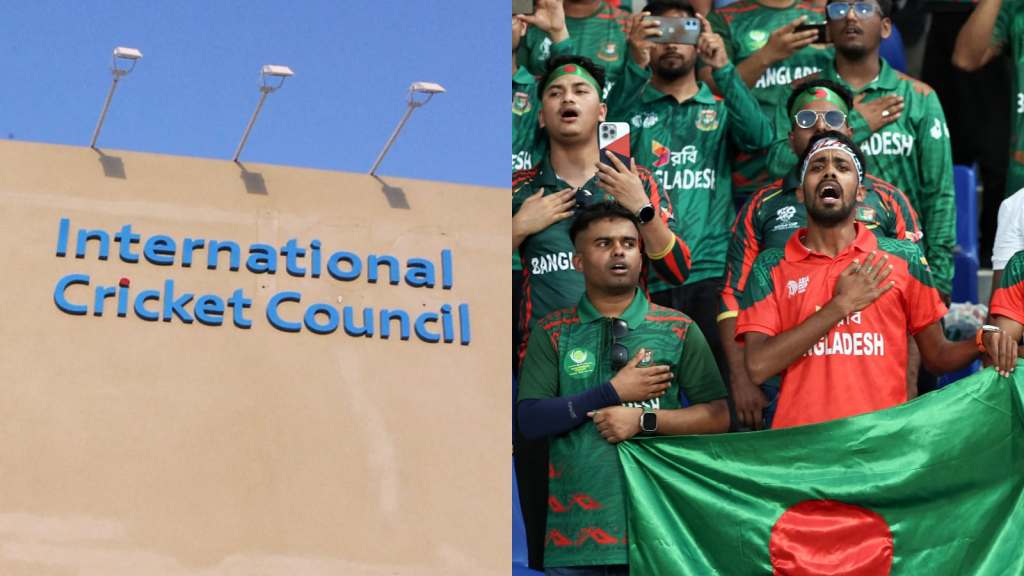
While cricket is historically heralded as the “Gentleman’s Game,” the 2026 ICC T20 World Cup has exposed a growing rift between sporting autonomy and sovereign interference. The recent crisis, marked by the Bangladesh Cricket Board’s (BCB) withdrawal from matches in India and the Pakistan Cricket Board’s (PCB) eleventh-hour reversal of a “solidarity boycott,” raises a fundamental legal question: To what extent does international cricket operate at the caprice of national governments?
This blog post examines the legal friction between the ICC’s Memorandum and Articles of Association, which mandate member autonomy, and the ICC Code of Ethics, which imposes an “overriding duty of loyalty” on Board Directors. By scrutinizing the statutes of the BCCI, BCB, and PCB, alongside historical precedents of forfeiture, this article argues that the current legal framework is struggling to mitigate “institutional conflicts of interest.” It concludes by proposing structural reforms to the ICC’s dispute resolution mechanisms to protect the game’s integrity from escalating geopolitical manoeuvres.
Introduction
The 2026 international cricket season has been defined less by on-field statistics and more by the complex intersection of Lex Sportiva. This transnational, autonomous legal order standardizes the rules of the game across borders, ensuring a constitutional equilibrium between the private justice of sports federations, national legal systems, and regional geopolitics. The recent events surrounding cricket have occurred during the ICC T20 World Cup and other tournaments. The no-handshake policy of India during the match with Pakistan, in light of the Pahalgam attack, which was also observed in the last game, when the Indian captain refused to shake hands with the Pakistan counterpart during the toss. The most talked-about matter was the Bangladesh Cricket Board’s forfeiture of matches in India, citing security issues, and the Pakistan Cricket Board’s solidarity boycott, which was later reversed within 11 hours. The International Cricket Council (ICC) decided not to impose any penalties on the Bangladesh Cricket Board (BCB). It acknowledged that the BCB retains the right to approach the Dispute Resolution Committee (DRC) if it chooses to do so. This right exists under current ICC regulations and remains intact. These events raise a fundamental legal dilemma for the International Cricket Council (ICC): When member boards prioritize nationalistic directives over their statutory obligations, does the ICC possess the constitutional fortitude to enforce its mandates uniformly, or is the Gentleman’s Game governed by a selective application of its own laws?
Obligations of the Parties
Article 2.4 of the ICC Articles of Association outlines the obligations of the members, under which the members of the Council are obliged to fulfil the twelve conditions. Article 2.4 (D) provides that members must act independently and manage their affairs autonomously, without interference from the government, quasi-public bodies, or other public bodies, in the governance and regulation of cricket in their cricket-playing country. In this situation, the Pakistan government had asked the team not to take the field for the clash against arch-rivals India to show support to Bangladesh. While the government itself is not a signatory to the ICC’s statutes, the crux of the matter lies in the PCB’s subsequent adherence to this political directive. By allowing a sovereign mandate to dictate on-field participation, the PCB arguably abdicated its duty of independent governance. This subservience to state foreign policy constitutes a regulatory omission that violates the spirit and letter of Article 2.4(D). Under the transnational norms of Lex Sportiva, the PCB’s failure to insulate its administrative decisions from state pressure transforms a diplomatic manoeuvre into a clear breach of the constitutional autonomy required for ICC membership.
Sporting Neutrality vs. National Sentiment
Article 2.4 (I) states that the Boards are to avoid doing an act or omission that brings Cricket or ICC into disrepute or is contrary to the best interests of Cricket or the ICC. The BCCI’s no-handshake policy, the BCB’s match forfeitures, and the PCB’s transformation of the sport into a theatre of geopolitical hostility. As per the Article, officials are required to act in the best interest of Cricket, interpreted as the preservation of Sporting Neutrality. Individual players are personally accountable for maintaining the Spirit of Cricket under the ICC Code of Ethics. During the 2025 Asia Cup, the Indian Captain dedicated a victory over Pakistan to the victims of the Pahalgam attack. Following a complaint by the PCB, the ICC Match Referee found the Captain guilty of breaching Article 2.21 of the ICC Code of Conduct, an unlevel offense concerning conduct that brings the game into disrepute, and was sanctioned with a 30% match fee fine and two demerit points. At this stage, the legal breach remained a personal disciplinary matter, categorized as an individual’s failure to maintain sporting neutrality. The legal transition from individual player conduct to institutional Board policy is evidenced by two distinct acts of Sanction by Advocacy. First, the BCCI’s decision to utilize its extensive resources to appeal the Captain’s fine for the Pahalgam dedication formally moved the organization from a neutral administrator to an active legal protector of a political gesture. Second, the issuance of the formal Media Advisory on April 23, 2025, represented a structural shift; unlike a spontaneous player dedication, the Board mandated a 60-second moment of silence, the wearing of black armbands by match officials, and the complete removal of stadium fanfare during a match. By directing match officials and commentators to participate in a tribute to a sovereign grievance, the Board bypassed passive support in favour of active institutionalization, effectively transforming a private act of grief into a Board-sanctioned policy, prioritizing national sentiment over the ICC’s fundamental mandate to maintain a unified, politically neutral global brand under Lex Sportiva. By using the pitch as a platform for sovereign grievances, the boards and players arguably prioritize nationalistic “whims” over the ICC’s interest in maintaining a unified, politically neutral global brand. The same can be seen in the actions of New Zealand and England in the 2003 edition, and of the West Indies in the 1996 edition.
Actions Taken by ICC
Before reviewing the Boards’ actions, we need to examine ICC’s stance on these events over the years. From the events, we can see that the ICC’s decisions were transient from one edition to the next. The structural inequity of global cricket is codified in Article 2.7 of the ICC Articles of Association, which divides the cricketing world into a two-tier hierarchy of ‘Full’ and ‘Associate’ Members. While the autonomy mandates of Article 2.4 constitutionally bind both classes, the 2026 World Cup crisis revealed a staggering enforcement gap. By facilitating the political withdrawals of Full Members while utilizing Associate Members as operational contingencies, the ICC underscored an uncomfortable reality: in the governance of Lex Sportiva, the ‘Condition of Membership’ is secondary to the ‘Value of the Market.’ For instance, in 2019, the ICC invoked absolute discretion to suspend Zimbabwe Cricket with immediate effect over government interference, freezing all funding and banning them from events. Conversely, during the 2026 crisis, despite the Bangladesh and Pakistan boards citing government-aligned security concerns to justify potential forfeitures, a clear breach of the autonomy mandate, the ICC refrained from imposing punitive measures. Instead, it utilized Scotland as an operational contingency to protect the tournament’s commercial viability. By facilitating the political withdrawals of high-value members while holding smaller boards to an absolute compliance standard, the ICC erodes its democratic legitimacy and reinforces its perception as a private club rather than a global regulator of Lex Sportiva.
While looking into the legal remedies provided to the members. Under Article 9 of the ICC Articles of Association, the Chairperson is granted the extraordinary “quasi-judicial” power to decide any dispute concerning the interpretation of the ICC’s constitution or the effect of Board resolutions. While an administrative act involves the routine application of policy, this power is quasi-judicial because it requires the Chairperson to independently adjudicate disputes, interpret constitutional ambiguities, and determine the legal rights of Member Boards. By issuing rulings on the “effect” of Board resolutions that bind the membership, the Chairperson essentially functions as a private high court within the framework, exercising interpretive discretion typically reserved for judicial bodies. This provision establishes a hierarchy in which the Chairperson’s decision is final and binding, subject only to a “sole and exclusive” right of appeal to the Dispute Resolution Committee (DRC). In the 2026 World Cup crisis, this meant that the Chairperson’s interpretation of “security threats” and “forfeiture” carried the weight of constitutional law.
While Article 9 provides a safeguard for disputes involving the Chairperson personally, requiring a direct referral to the DRC to avoid nemo iudex in causa sua, i.e., no one should be a judge in their own cause. In practice, the DRC has struggled to function as an independent judicial body, often prioritizing the Best Interests of Cricket, a commercially-weighted and legally elastic term, over strict statutory compliance. This leads to the conclusion of Administrative Enclosure by channelling all disputes through a committee ultimately appointed by the very Board it oversees, the ICC effectively isolates its decisions from external judicial scrutiny. Consequently, the DRC does not function as a neutral balancer of the Two-Tier Enforcement Regime. Instead, it serves as a final layer of institutional defence that ratifies the Chairperson’s discretionary interpretations of market value, leaving Associate Members with no viable internal remedy against selective enforcement and reinforcing the private-club nature of global cricket governance.
The ICC’s suspension of Zimbabwe Cricket (ZC) in 2019 serves as the definitive legal benchmark for enforcing Article 2.10, where the global body invoked its “absolute discretion” to freeze funding and bar the nation from World Cup qualifiers following government interference in board elections. However, this “unwavering commitment” to autonomy appeared to shift toward “facilitative realpolitik” during the 2026 World Cup crisis. Despite the Bangladesh Cricket Board (BCB) initiating a politically motivated withdrawal from the tournament after the ICC rejected its request to relocate venues, the ICC Board opted against the punitive measures available under Article 2.10. While having the discretionary power to suspend a member for a serious breach of the autonomy clause, the ICC stated on February 9, 2026, that the BCB would face no financial, sporting, or administrative penalties. By replacing Bangladesh with Scotland while promising the BCB future hosting rights, the ICC effectively created a “commercial exemption” to its own constitution. The threshold for ‘interference’ appeared to shift when viewed through the lens of the BCCI’s dominance. The BCCI’s directive to an IPL franchise to release a Bangladeshi player, widely viewed as a response to sovereign political pressure, triggered a chain of events culminating in the BCB’s withdrawal from the World Cup, which had violated Article 2.2.2.2 of the Code of Ethics, an ICC Director is strictly prohibited from promoting the interests of any governmental or political body if such interests conflict with the best interests of the ICC. By facilitating a commercial exemption for the BCB in exchange for a quiet withdrawal and replacement by Scotland, the ICC Directors involved arguably prioritized the integrity of the market over their fiduciary duty to the statutes.
This selective application suggests that Article 2.10 remains a “nuclear option” reserved for smaller markets. In contrast, the ethical constraints of Article 2.2.2.2 are treated as flexible mediation tools when dealing with Full Members of high broadcast value. By failing to hold Directors accountable for state-aligned interference, the ICC reinforces a two-tier regime where the “Condition of Membership” is consistently outweighed by the Value of the Market.
The ICC’s failure to sanction the initial 2025 “handshake snubs” during India-Pakistan fixtures has established a dangerous precedent of Regulatory Passivity. By treating a systemic omission of sporting etiquette as a mere diplomatic nuance, the ICC signalled to its member boards that “reputational harm” under Article 2.4 (I) of Articles of Association is permissible if backed by significant sovereign pressure or market power. This stands in stark contrast to the 2023 World Fencing Championships, where Ukrainian fencer Olha Kharlan was issued a black card for refusing to shake the hand of her neutral-status Russian opponent, Anna Smirnova. In that instance, the International Fencing Federation (FIE) initially maintained that the handshake was a non-negotiable mandatory requirement, the absence of which constituted a terminal breach of the sport’s integrity. While the FIE eventually paused the suspension following an unprecedented intervention by the International Olympic Committee (IOC), subsequently amending its rules to allow for a remote greeting, the incident proved that other global bodies view these rituals as essential statutory anchors. For the ICC, however, the unpunished omission of a handshake is not merely a breach of manners; it is a breach of the Spirit of Cricket that allows the pitch to be repurposed as a site of geopolitical theatre, effectively prioritizing the integrity of the market over the integrity of the statutes.
The final frontier of cricketing justice is often perceived to be the Court of Arbitration for Sport (CAS), yet the ICC’s fragmented regulatory architecture strictly circumscribes its jurisdiction. Under Article 3.5 of the ICC Code of Ethics, the CAS is designated as the definitive forum for appeals, but this applies only to decisions arising from the Ethics Tribunal. In contrast, the most significant geopolitical disputes, such as membership status or venue relocation, are governed by Article 2.12 of the Articles of Association, which channels disputes exclusively to the internal Dispute Resolution Committee (DRC) with no automatic or standard route to external arbitration. This jurisdictional map creates a state of Administrative Enclosure; because the DRC is an internal body appointed by the ICC Board itself, the ICC effectively isolates its most politically sensitive decisions from external judicial scrutiny. For boards challenging the ICC’s absolute discretion in membership matters, the lack of a direct CAS nexus, combined with the strict 21-day filing deadlines for ethics matters, ensures that the sporting reality on the ground becomes irreversible long before a legal remedy can be realized, rendering the CAS a powerful but effectively siloed instrument of justice.
Recommendations
To restore the democratic legitimacy of Lex Sportiva and prevent the pitch from becoming a site of geopolitical theatre, the ICC should transient from a policy of “diplomatic ambiguity” to one of “codified neutrality.” This begins by amending Article 2.1 of the Code of Conduct to categorize the refusal of a traditional handshake, or an approved alternative such as the “distanced salute”, as a mandatory requirement, with non-compliance constituting a Level 2 Offense, a serious disciplinary breach that typically results in a fine of 50% to 100% of the player’s match fee and the imposition of three or four demerit points, which would eliminate the “Regulatory Passivity” that currently allows boards to use “reputational harm” as a political tool. Furthermore, the ICC should replace the Board’s “absolute discretion” under Article 2.10 with a transparent, automatic disciplinary matrix that triggers suspensions whenever a National Board follows a documented government directive to boycott an ICC Event, which requires a clear legal distinction between government influence, informal political pressure, and a documented directive, which is a formal, verifiable exercise of sovereign authority that renders the Board an instrumentality of the state. To provide a necessary check on the Article 9 interpretive powers of the Chairperson, an independent Ethics Oversight Panel should be established to review all high-stakes governance decisions. By insulating the Dispute Resolution Committee from internal board influence and enforcing these mandates with a “market-blind” consistency, the ICC can ensure that the “Gentleman’s Game” is governed by the strength of its statutes rather than the gravity of its revenue.
[For queries or feedback, the Author can be reached out at sanjanasajeev2086@nuals.ac.in]
*DISCLAIMER- The opinions and views expressed in this article are that of the Author(s) and not of SLRI- the expressed opinions do not, in any way whatsoever, reflect the views of any third party, including any institution/organisation that the Author(s) is/are currently associated to or was/were associated to in the past. Furthermore, the expressions are solely for informational and educational purposes, and must not be deemed to constitute any kind of advice. The hyperlinks in this blog might take you to webpages operated by third parties- SLRI does not guarantee or endorse the accuracy or reliability of any information, data, opinions, advice, statements, etc. on these webpages.
PREFERRED CITATION: Sanjana Sajeev, Sovereignty vs. Stumps: The Failure of Member Autonomy in the 2026 ICC T20 World Cup, Sports Law Review India, published on 5 April 2026.
 LET'S TALK SPORTS LAW
Leave a comment